


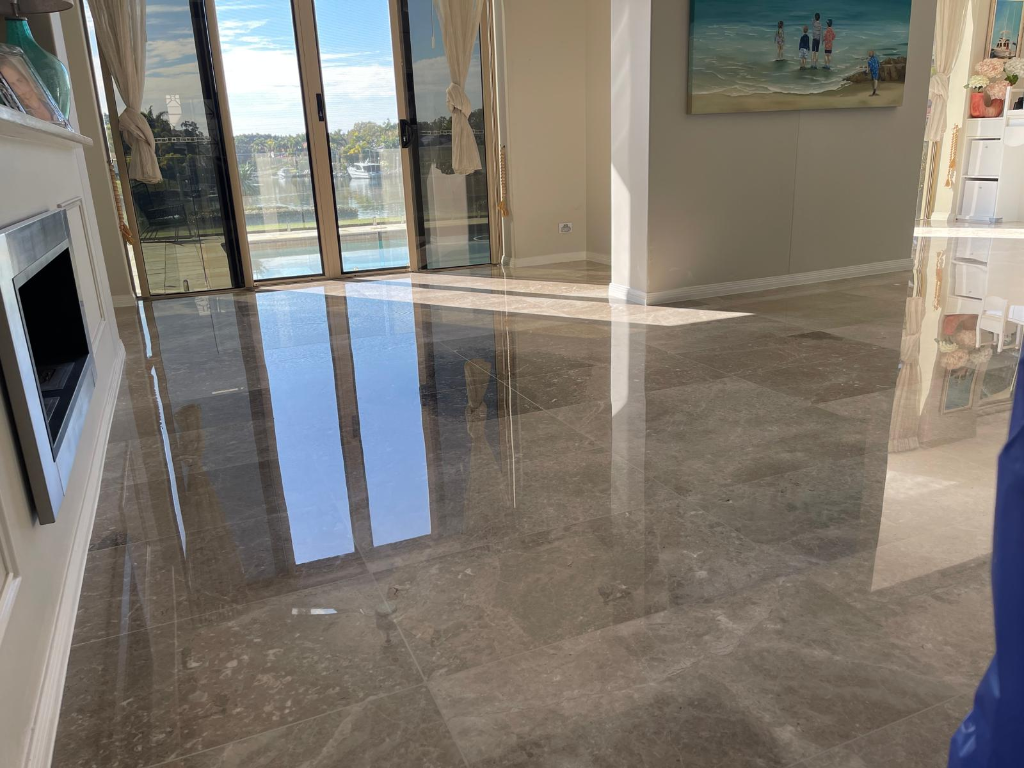
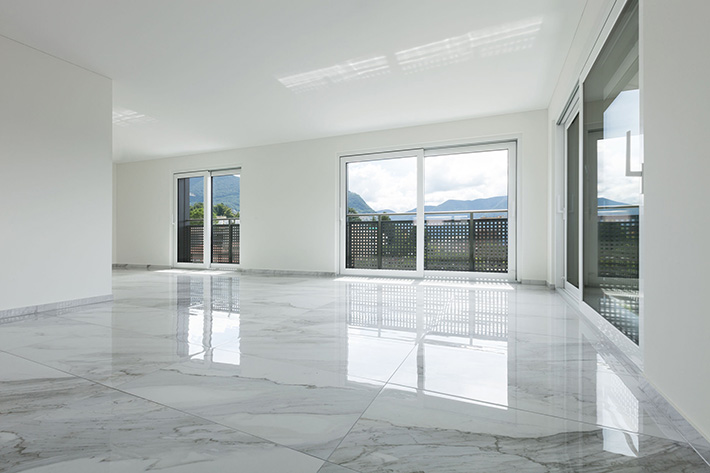
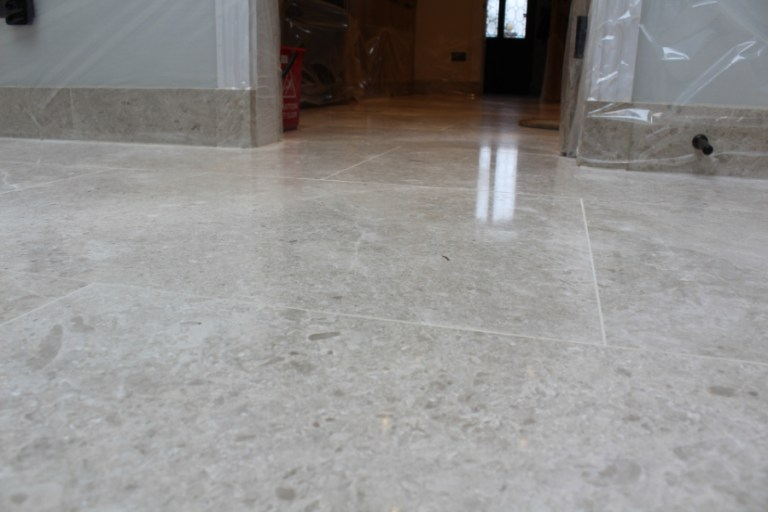
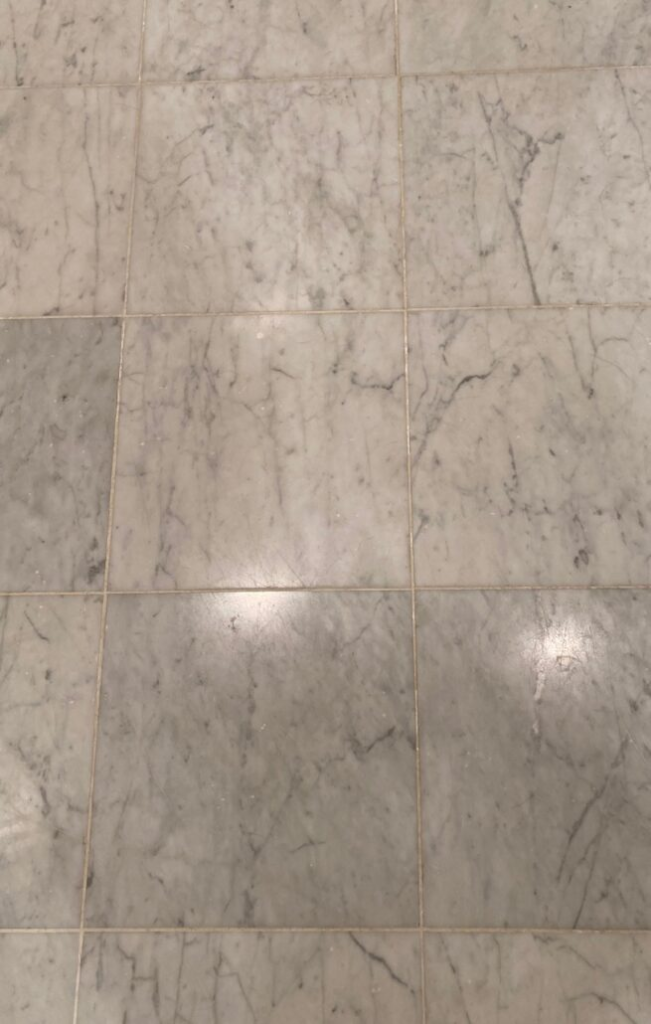

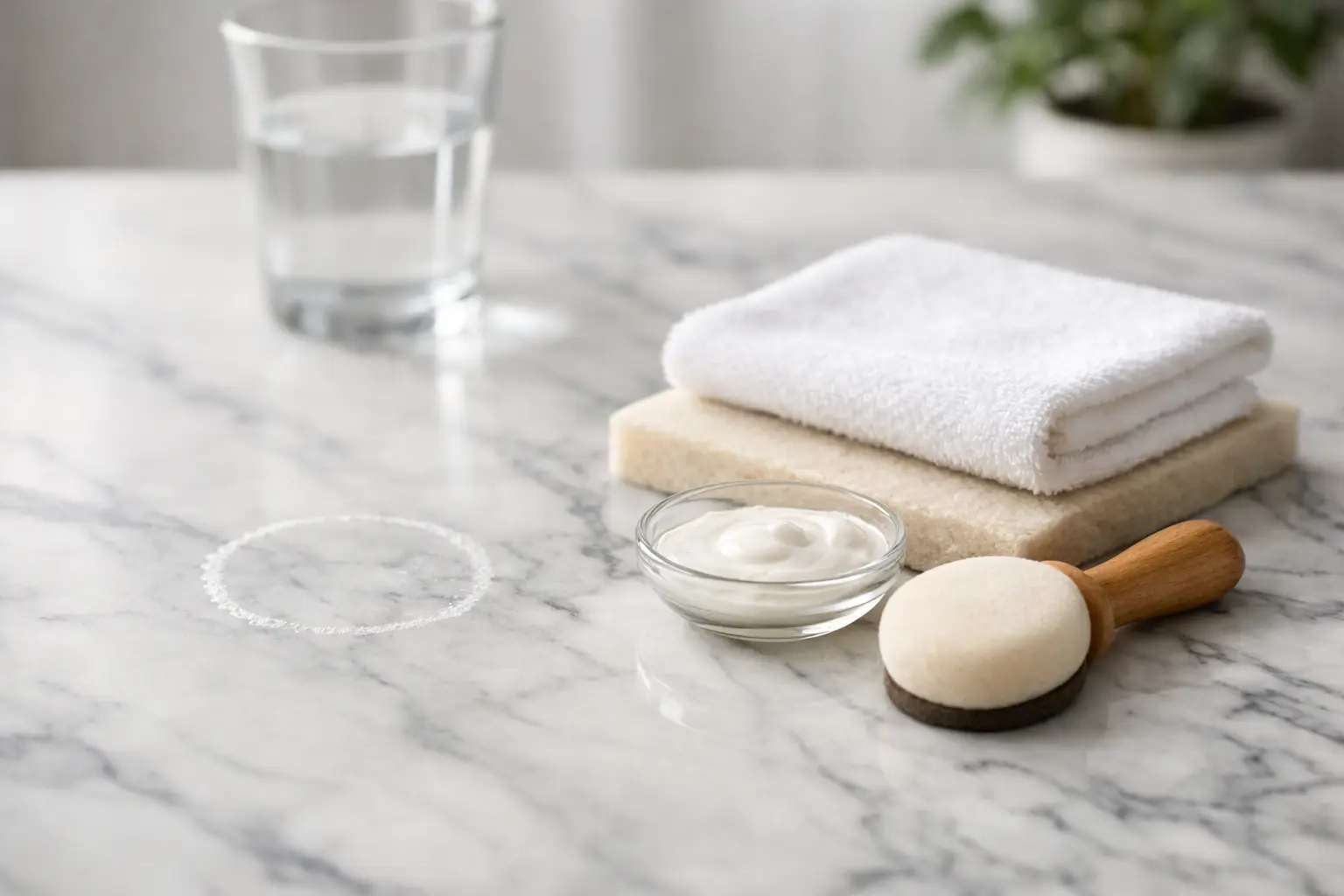
A ring left by a cold glass can make a polished marble benchtop or table look permanently marked. The right way to fix water rings on marble depends on what has actually changed: the stone’s surface finish, its colour beneath the surface, or both. Treating every ring as a simple stain is where costly damage often begins.
Marble is porous and calcium-based. It can absorb moisture, but it also reacts to acidic liquids and some cleaning products. A pale, dull ring is usually an etched area rather than a water stain. A darker ring may indicate moisture or a contaminant held within the stone. Those are different issues and need different treatment.
Identify the Ring Before You Attempt a Repair
Start by looking at the mark in natural light from several angles. If the ring is lighter than the surrounding marble, feels slightly rough, or has lost its reflective sheen, it is likely etching. Condensation can carry trace minerals and residue from the glass, while drinks such as wine, juice, soft drink and tonic water can etch marble quickly.
If the ring looks darker than the marble and the surface still feels smooth and glossy, moisture may have entered the pores. This is more common on lighter, more absorbent marbles, around unsealed areas, or where a drink has been left in place for some time. A dark mark can also contain oils, colourants or residue from a coaster, which makes the diagnosis less straightforward.
A third possibility is a mark in the sealer rather than the marble itself. Sealers reduce absorption, but they do not make marble stain-proof or acid-proof. Some sealers can become patchy, cloudy or worn, particularly on heavily used kitchen islands, vanity tops and hospitality tables.
First Response for Fresh Water Rings on Marble
For a recent ring, remove any remaining moisture with a clean, dry microfibre cloth. Blot rather than rub. Rubbing can spread residue across the surface and may create fine scratches in a polished finish.
Clean the area with a pH-neutral stone cleaner and a soft cloth, then dry it completely. Do not use dishwashing liquid, vinegar, lemon, bathroom cleaner, cream cleanser or general-purpose sprays. Products that seem mild can leave a film, and acidic or abrasive products can permanently dull marble.
Once the surface is clean, leave the area uncovered and dry for 24 to 48 hours. A moisture ring may lighten as the stone dries. Avoid applying heat from a hair dryer or placing the surface in direct, intense sun. Rapid heating can stress the stone or affect adhesives and fills beneath it, particularly on thinner marble slabs and tiled surfaces.
If the ring has disappeared after drying, the immediate concern may be resolved. It is still worth reviewing the protection on the surface. Recurrent dark rings often point to a worn or unsuitable sealer, or to a stone finish that needs more considered maintenance.
How to Fix Water Rings on Marble Caused by Etching
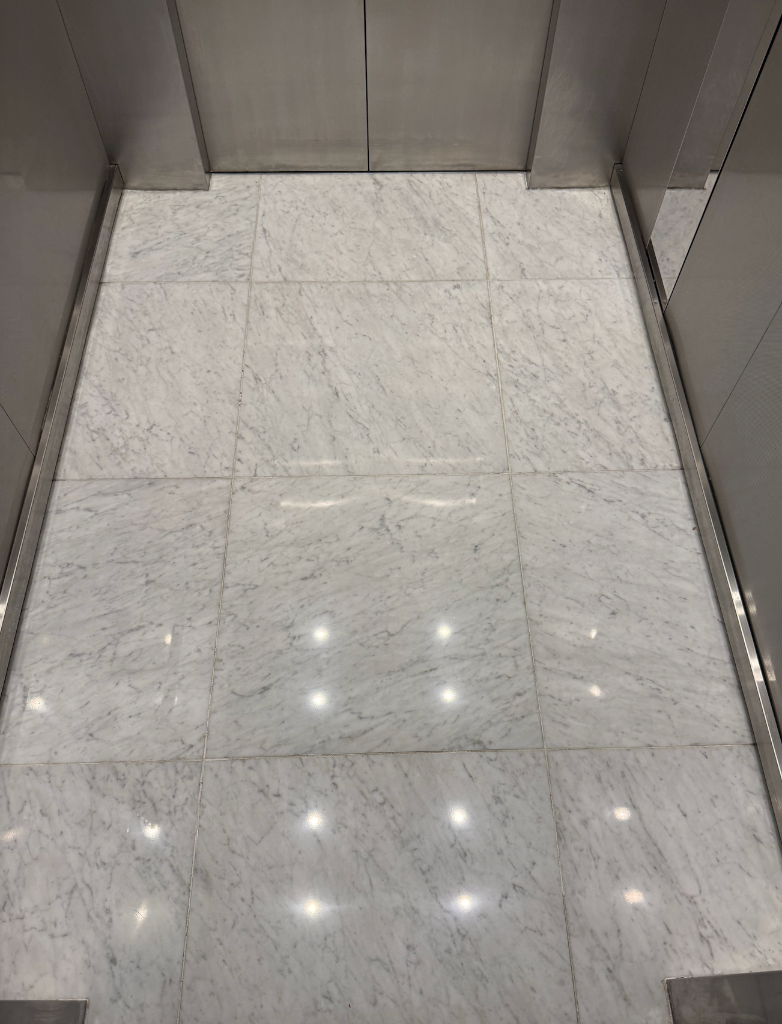
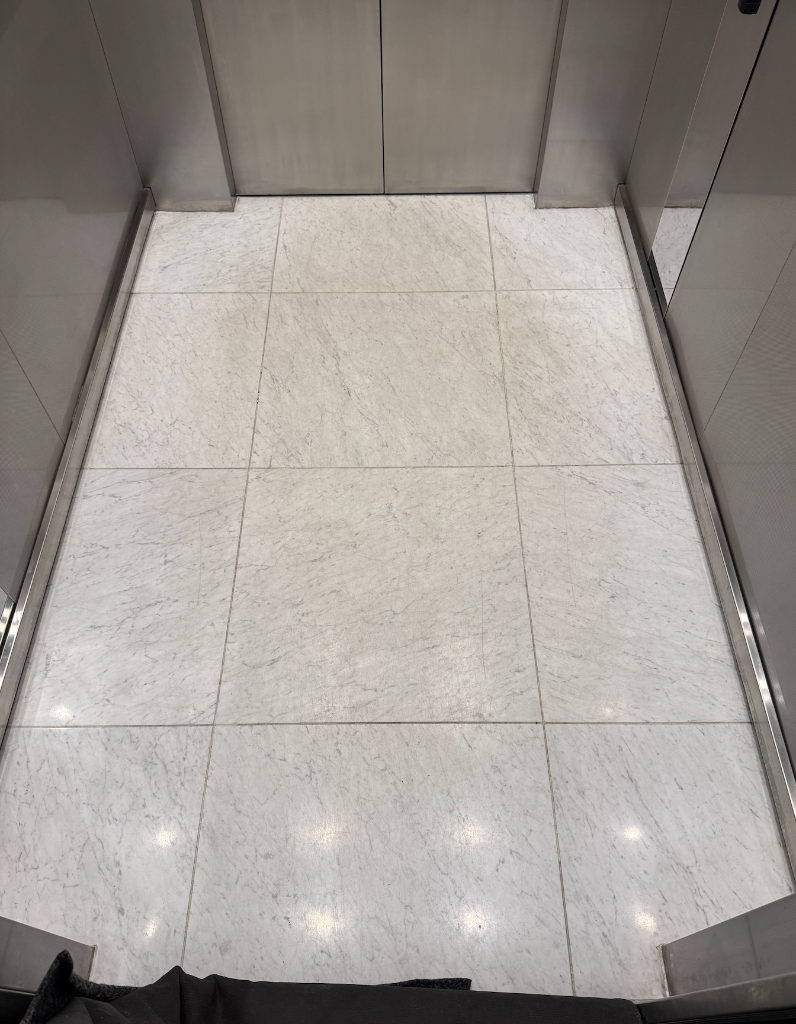
Etching is a surface damage issue. The marble has not simply been marked - a microscopic layer of the finish has been altered. On polished marble, this appears as a cloudy or dull circle because the light no longer reflects evenly from the surface.
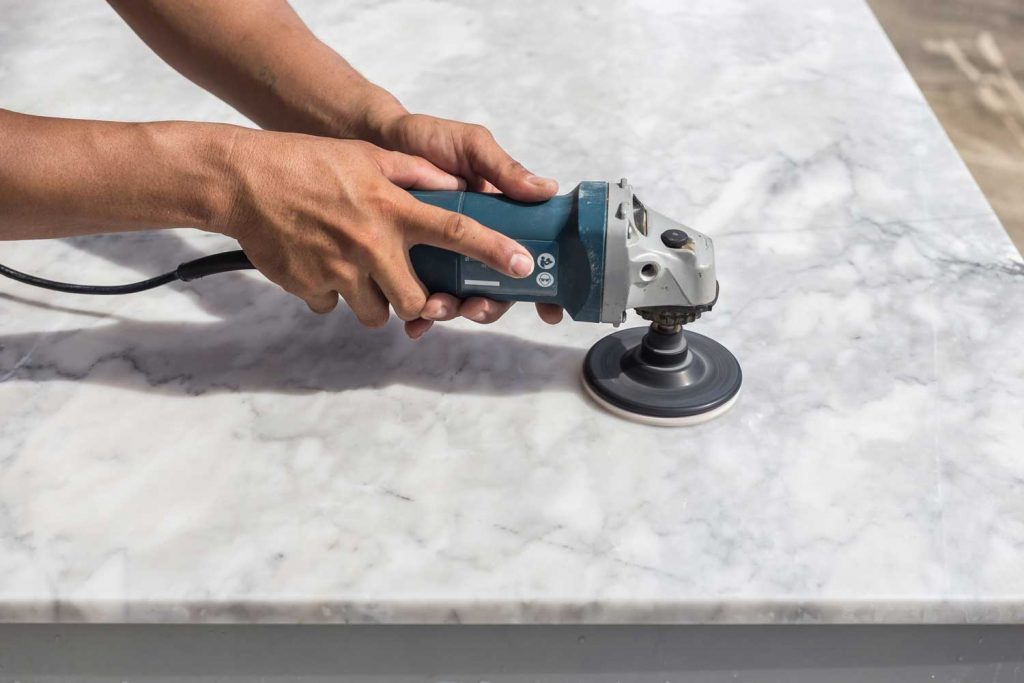
Small, very light etch marks may sometimes be improved with a marble polishing compound designed specifically for calcite-based stone. However, this is not a universal solution. The compound, pad pressure, working time and polishing technique must suit the particular marble and its finish. A product that improves one stone can leave another with a noticeably brighter patch, swirl marks or an uneven gloss level.
Honed marble requires particular care. Its low-sheen finish is intentionally soft and even. Polishing a ring too aggressively can create a shiny halo that is more obvious than the original mark. Dark marbles can also be sensitive because etching may show as a pale or grey area that needs controlled honing and colour matching, not simply polishing.
For visible etching on a prominent benchtop, dining table, foyer floor or commercial counter, professional honing and polishing is the more reliable approach. A specialist can blend the affected area into the surrounding finish, rather than creating a repaired spot that catches the eye from across the room.
When a Dark Ring Needs a Poultice Treatment
A dark ring that remains after adequate drying may be a stain within the stone. In that case, the appropriate treatment is often a poultice. A poultice uses an absorbent medium and a compatible cleaning agent to draw the staining material out of the pores over time.
The correct formula depends on the source of the mark. Water alone, oil, organic matter, metal transfer and dyed liquids each respond differently. Using the wrong chemical can bleach the stone, worsen an existing etch mark, leave a residue, or disturb surrounding sealant.
This is why a dark ring should not automatically be treated with a supermarket stain remover. Marble varies widely in density, mineral composition, polish and previous treatments. A concealed test area is essential before any corrective product is used on a visible surface.
Avoid These Common Marble Ring Remedies
Online cleaning advice often overlooks the difference between durable engineered surfaces and natural marble. The following approaches carry unnecessary risk:
- Vinegar, lemon juice and acidic bathroom cleaners can etch marble immediately.
- Bicarbonate soda pastes and abrasive powders may scratch or alter the polish.
- Magic erasers can dull polished stone through abrasion.
- Oil-based sprays may darken porous marble and attract grime.
- Household bleach can affect colour, resin fills and sealers.
Even when a remedy appears to work, it may only disguise the issue temporarily or leave the finish uneven. Marble repairs are judged by how well the surface blends overall, not just by whether the original ring becomes less visible.
Protecting Marble After the Ring Is Removed
Once the surface has been restored, protection is mostly about daily habits and suitable maintenance. Use coasters beneath glasses, especially where chilled drinks create condensation. On kitchen benchtops, wipe spills promptly rather than allowing water, juice, wine or cooking ingredients to sit on the stone.
Clean marble with a pH-neutral stone product and a soft microfibre cloth. For floors, use a well-wrung mop rather than flooding the surface. Excess water can carry soil into grout lines, joints and microscopic pores, and it is rarely necessary for routine cleaning.
Sealing can provide valuable stain resistance where the marble is absorbent, but it does not prevent etching. This distinction matters. A sealed polished marble table can still develop a dull ring from a citrus drink or a cleaning product. The best protection combines an appropriate impregnating sealer, correct cleaning and prompt spill management.
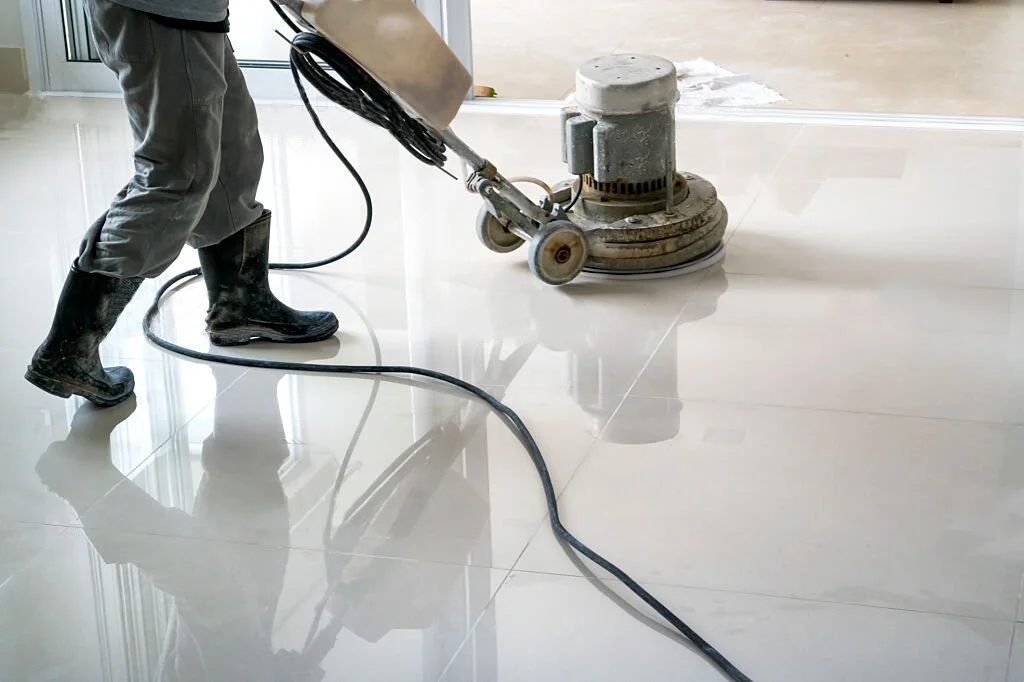
Commercial settings need a more structured plan. Marble in hotel lobbies, retail areas, bathrooms and hospitality venues is exposed to frequent traffic, cleaning chemicals and inconsistent day-to-day care. Scheduled maintenance helps preserve the finish before dull paths, staining and ring marks become major restoration work.
When to Call a Marble Restoration Specialist
Professional assessment is recommended when the ring is etched, darkening does not improve after drying, the mark covers a large area, or the marble has a distinctive honed, high-polish or textured finish. It is also the sensible option for bookmatched slabs, antique furniture, premium bathrooms and high-visibility commercial surfaces where an uneven repair would affect presentation.
A stone specialist assesses the marble type, finish, porosity, prior sealers and source of damage before selecting a treatment. Depending on the condition, the process may involve deep cleaning, stain extraction, controlled honing, polishing, sealing or a combination of these methods. This material-specific approach protects the stone while restoring a consistent appearance.
Sydney Stone Care provides specialist restoration and preservation services for marble and other natural stone surfaces across Sydney. Corrective work is tailored to the condition of the stone, with the aim of retaining the character and finish that made the material worth choosing in the first place.
A water ring does not have to become a permanent flaw, but marble rewards patience. Clean gently, allow fresh moisture marks time to dry, and avoid quick-fix products when the surface has lost its finish. Early, informed treatment gives the best chance of keeping the stone looking refined for years to come.