

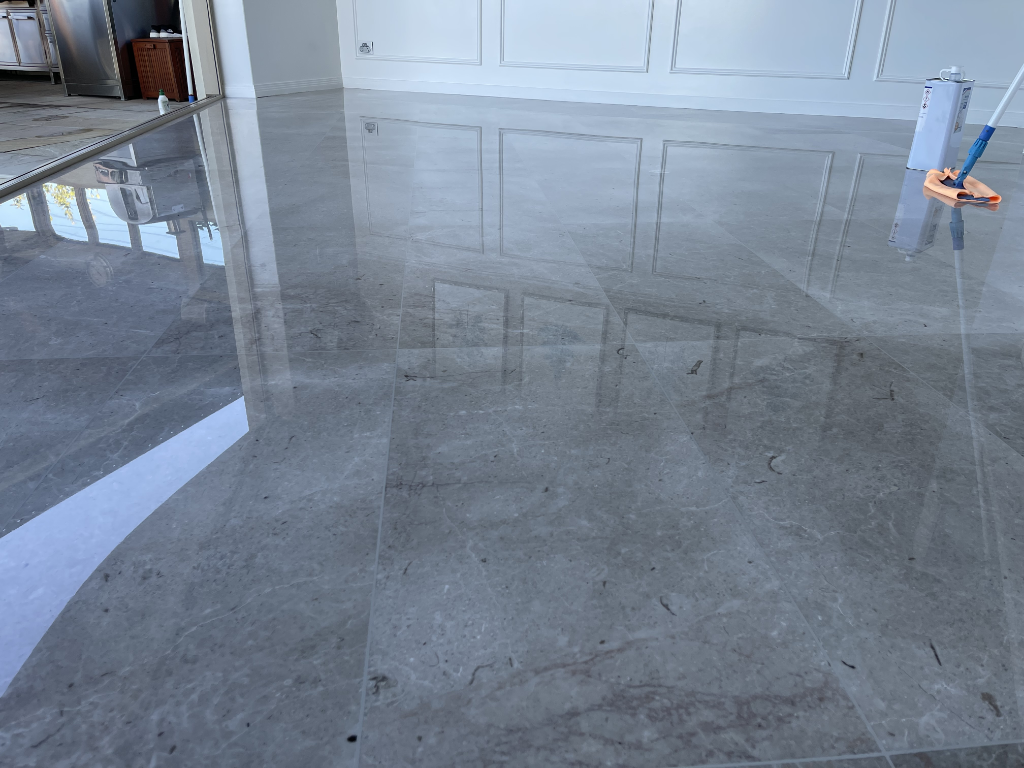
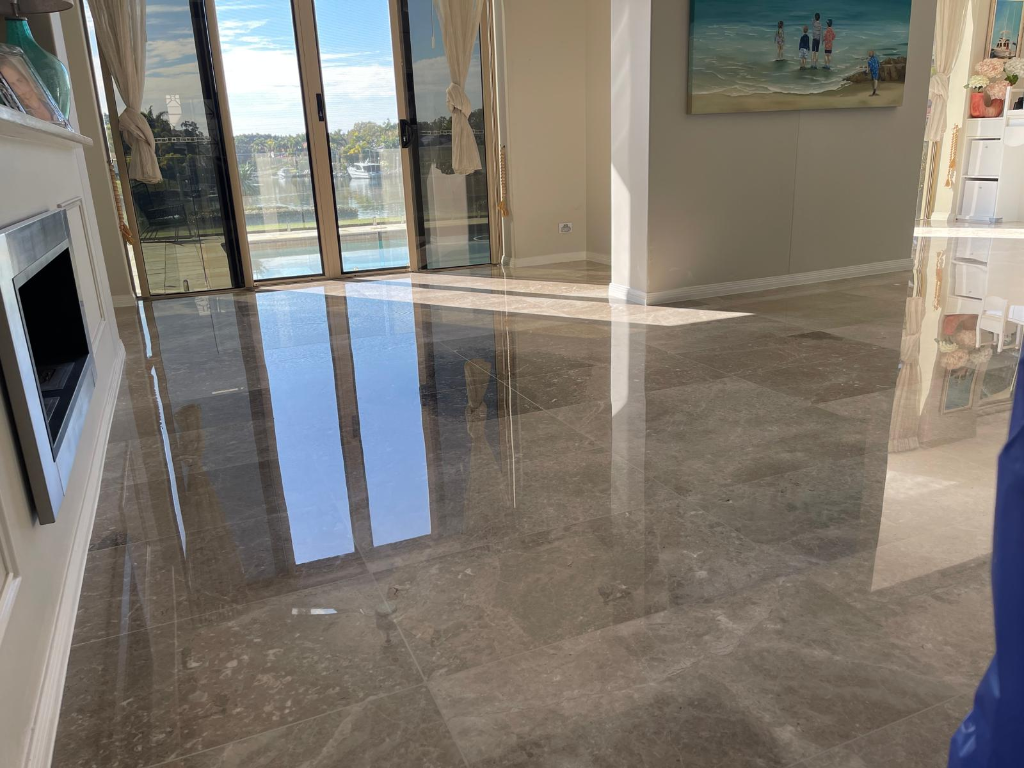
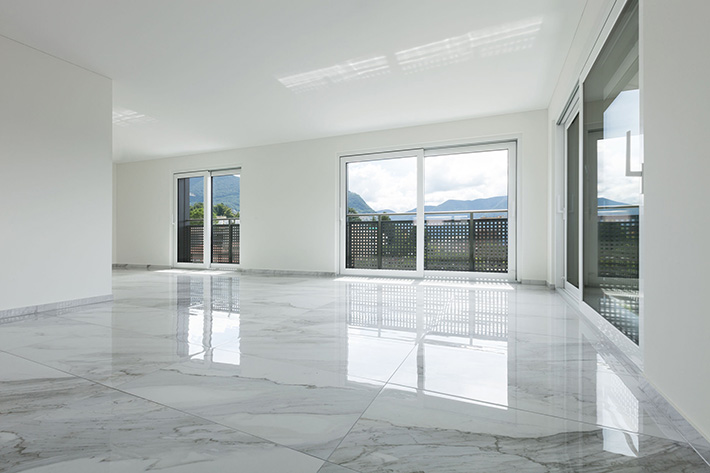
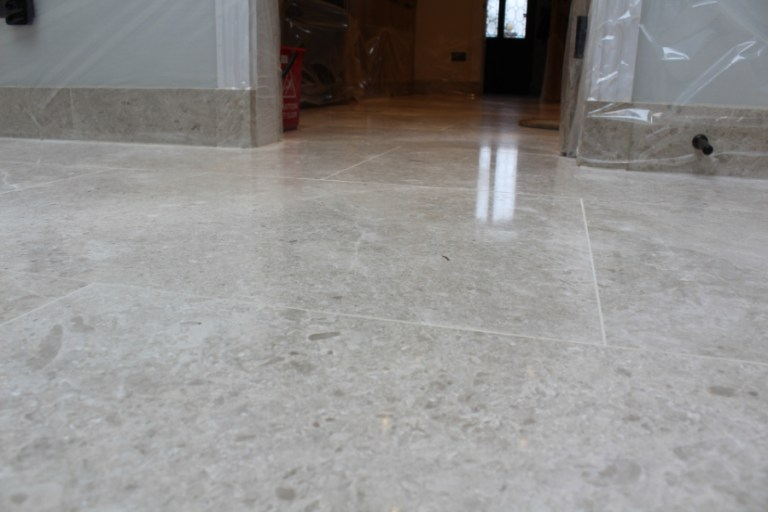
A travertine floor can look quietly luxurious for years, then begin showing the effects of daily life in very visible ways. Small holes collect grime, honed finishes become patchy, bathroom tiles develop etching around vanities, and busy commercial entryways lose their even appearance. Travertine repair is not simply a matter of making those marks less noticeable. It is a material-specific process that restores the stone’s surface while protecting its natural character and service life.
Travertine is a form of limestone, valued for its warm colour variation, natural pores and distinctive movement. Those same features mean it needs more considered care than ceramic tile, engineered stone or many man-made finishes. The right repair depends on the stone’s condition, its finish, its location and the cause of the damage.
What Professional Travertine Repair Can Address
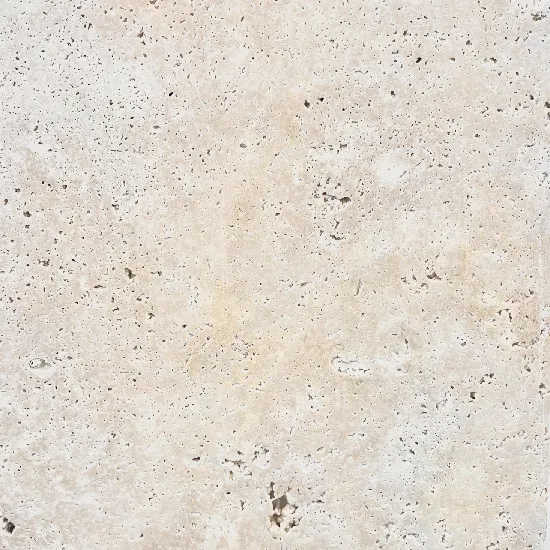
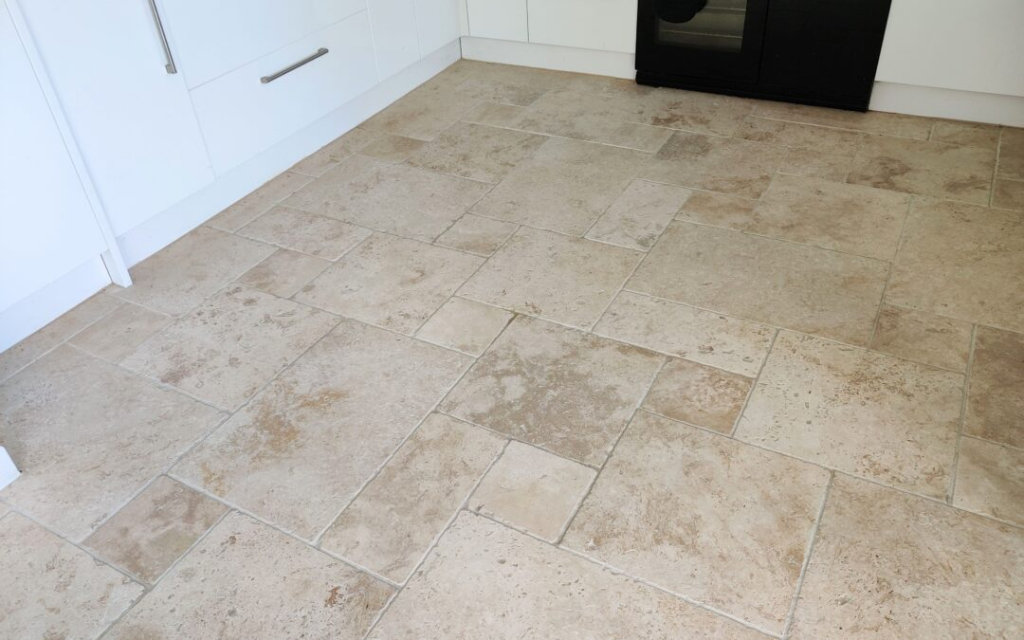
Travertine naturally contains voids formed during its creation. Some are left open for a more textured appearance, while others are filled to create a smoother, more refined surface. Over time, filled voids can fail, especially on floors exposed to foot traffic, moisture or movement in the substrate. These small pits are not always a structural concern, but they trap dirt and can make an otherwise well-maintained floor appear tired.
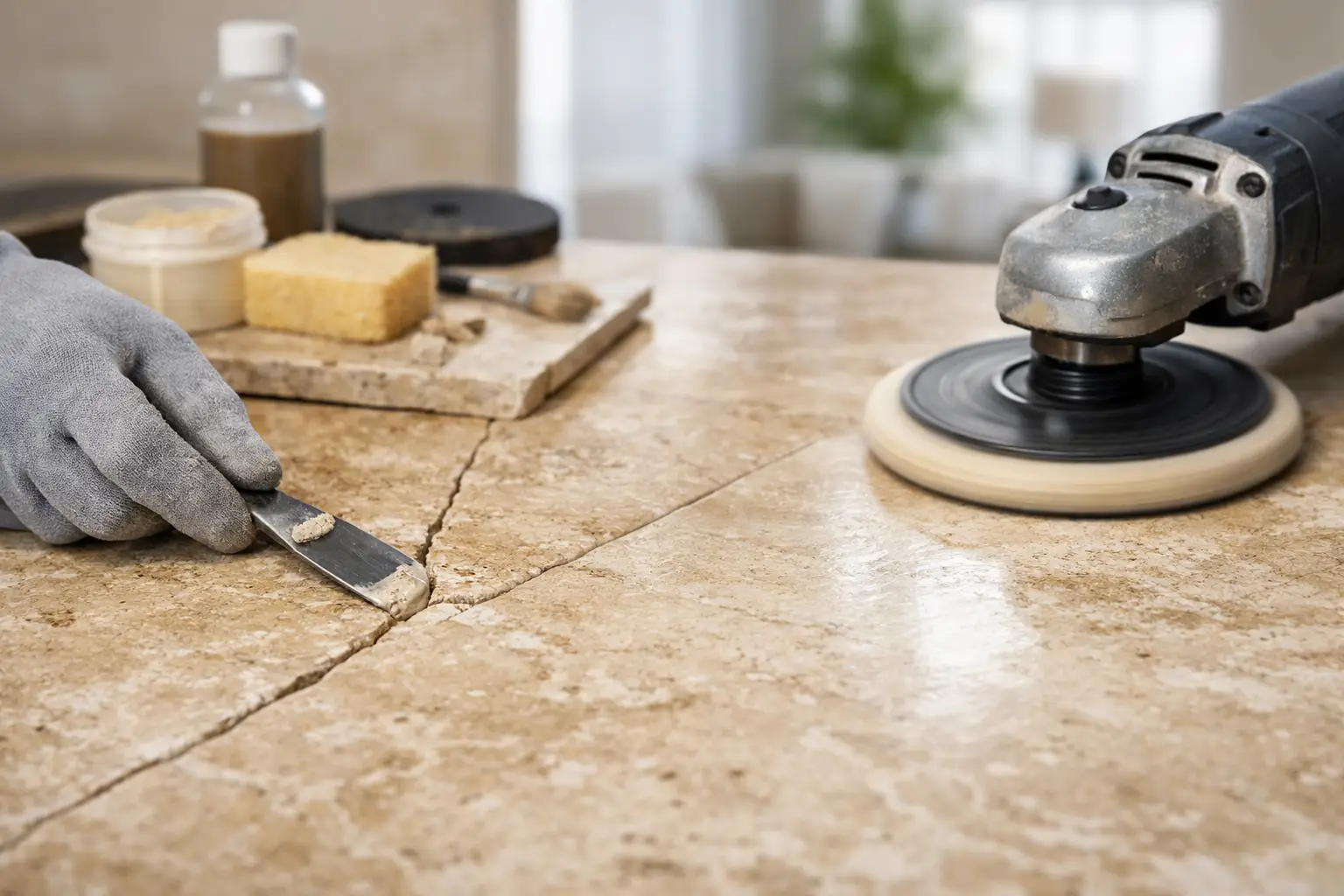
A specialist can colour-match and rebuild failed fills using suitable repair compounds, then level and refinish the affected area so it sits comfortably with the surrounding stone. The objective is not to make every tile look manufactured or identical. It is to restore a clean, cohesive finish without losing the inherent variation that makes travertine distinctive.
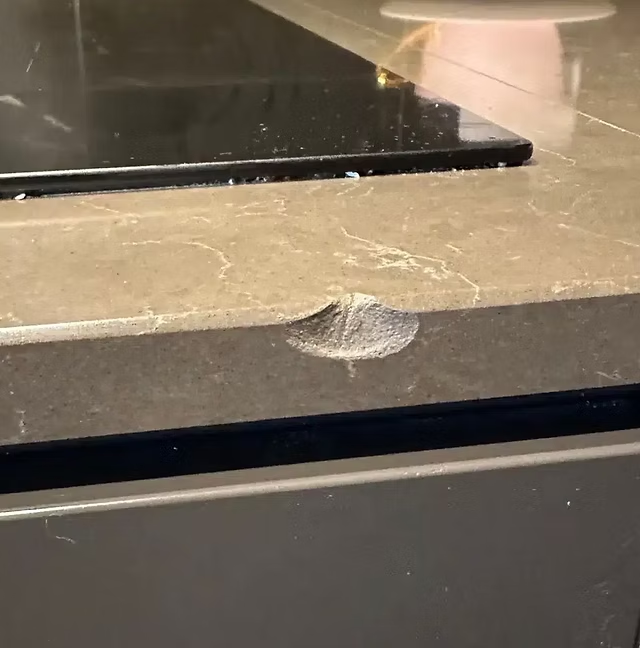
Chips around tile edges, cracks, scratches and worn traffic paths can also be repaired or reduced. The approach varies. A shallow scratch may respond well to honing and refinishing, while a deeper chip may require a carefully built repair before the area is blended. Cracks deserve closer assessment because they can result from movement beneath the tile, an impact event or a weak point around a cut-out. Filling the visible line without addressing the cause may only provide a short-term cosmetic result.
Stains and etching require different treatment again. Etching is a dull or pale mark caused when acidic products react with calcium-based stone. Lemon juice, wine, vinegar-based cleaners and some bathroom products are common causes. It is often mistaken for a stain, yet the surface has actually been chemically altered. Removing residue alone will not correct it. The affected finish generally needs to be re-honed and refined.
Why Travertine Needs a Material-Specific Approach
Natural stone repair is a sequence of controlled steps, not a one-size-fits-all cleaning service. Travertine may be polished, honed, brushed, tumbled or filled, and each finish reflects light differently. A repair that looks acceptable on a matte, honed floor can stand out sharply if applied to polished tiles. Likewise, a smooth repair on a tumbled outdoor paver may look unnatural even if the colour is close.
Before work begins, the stone should be inspected for its finish, porosity, pre-existing sealers, previous repairs and signs of moisture or substrate movement. In Sydney properties, this is particularly relevant for exterior areas exposed to weather changes, pool surrounds, balconies and ground-level spaces where moisture can travel through or beneath the stone.
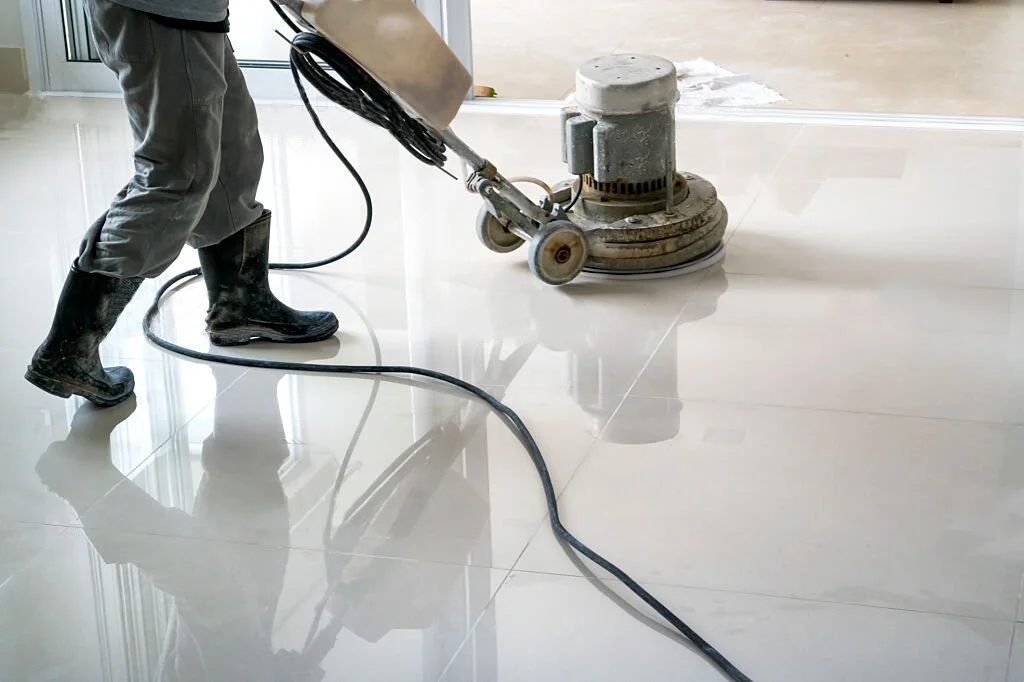
The repair process may involve deep cleaning, removal of unstable fill, colour matching, rebuilding voids or chips, controlled honing, polishing where appropriate, grout attention and sealing. Not every job requires every stage. A few isolated holes in a lightly used entry may need targeted filling only, while a large commercial floor with dull traffic lanes may require broader restoration to achieve a consistent result.
The trade-off is clear: localised repairs are often more economical and preserve more of the existing finish, but they can be difficult to blend where the stone has aged unevenly. Full-area honing provides a more uniform outcome, although it involves greater time, access planning and cost. A professional assessment should set realistic expectations before any corrective work starts.
Repairing Holes and Failed Fill
Open pores are part of travertine’s natural appearance, so not every hole should automatically be filled. On an indoor honed floor, filling can improve cleanability and create a more elegant finish. In a rustic, tumbled outdoor setting, open voids may be intentional and suit the design better.
Where filling is appropriate, loose material is removed and the void is prepared before a compatible compound is applied. Colour matching matters, but so does the finished texture and level. A filler that is too light, too glossy or raised above the tile can become more distracting than the original defect. Once cured, it may be honed to align with the stone’s surrounding finish.
Treating Scratches, Dullness and Etching
Surface wear is especially common in foyers, kitchens, hospitality venues and retail settings. Fine scratches and foot traffic gradually scatter light, leaving parts of the floor duller than less-used areas. This is not always a sealer problem. In many cases, the stone surface itself needs refinement.
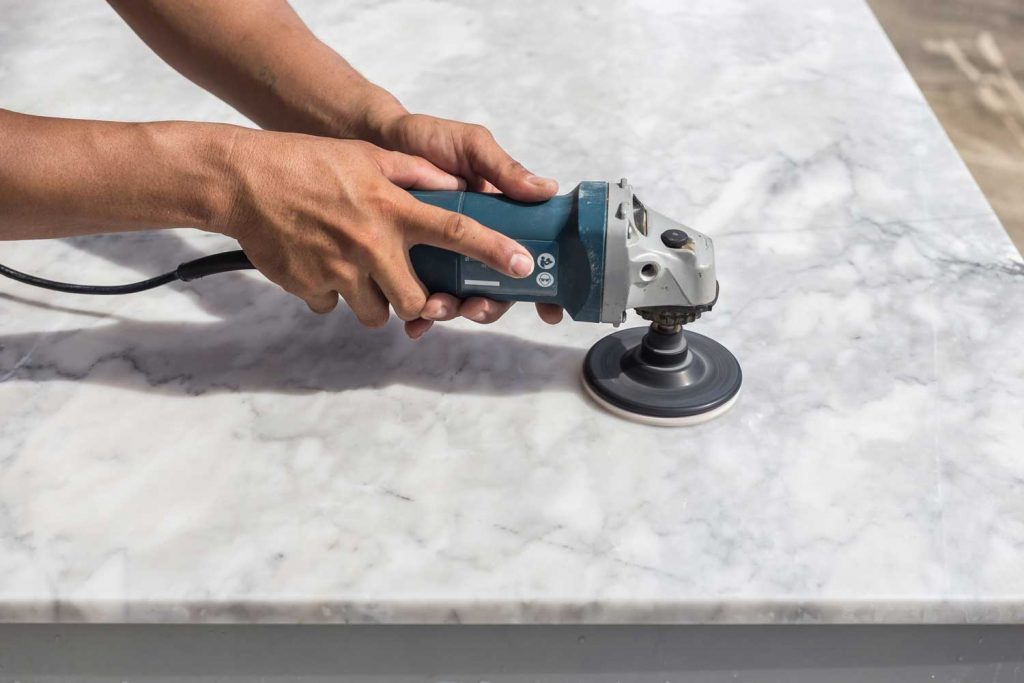
Professional honing uses progressively finer abrasives to remove or reduce damage and restore the chosen finish. For honed travertine, the goal is a smooth, low-sheen surface with a consistent appearance. For polished stone, further polishing stages may be required. The amount of material removed should always be carefully controlled, particularly on older tiles or stone with uneven thickness.
Etching around bathroom vanities, bar areas and kitchen benchtops can often be improved through the same principles. However, if acidic products continue to be used, the marks will return. Repair should be paired with practical maintenance habits, not treated as a permanent shield against unsuitable cleaners.
Managing Cracks and Loose Tiles
A crack should never be viewed only as a surface blemish. If the tile is loose, sounds hollow, has shifted in level or repeatedly re-cracks after repair, there may be movement in the backing, adhesive failure or a moisture issue. These conditions need investigation before cosmetic restoration proceeds.
Hairline cracks caused by a one-off impact may be repairable with a colour-matched resin or filler. Larger breaks can sometimes be stabilised and visually improved, although replacement may offer a better long-term result when a matching spare tile is available. On heritage, high-value or discontinued stone installations, repair is often preferable to replacement because new material may not match the established colour and patina.
Protecting Travertine After Restoration
Sealing is an important final consideration, but it is not a cure for every stone issue. A quality penetrating sealer can help slow the absorption of spills and make routine cleaning easier. It does not prevent etching, eliminate the need for prompt spill response or compensate for an incorrect cleaning regime.
The right sealer depends on the stone’s location, level of porosity and intended appearance. Some products can deepen colour or leave a more enhanced look, while others are designed to maintain a natural finish. Testing in an inconspicuous area is sensible, particularly with highly varied travertine.
Daily and weekly care should be uncomplicated. Use a pH-neutral cleaner made for natural stone, clean spills promptly and avoid abrasive pads or acidic household products. Entry mats can reduce grit brought in from outside, which matters more than many owners realise. Fine sand under shoes acts like an abrasive on high-traffic stone floors, gradually wearing the finish.
For commercial premises, scheduled maintenance is usually more cost-effective than waiting until the floor appears heavily worn. Regular professional cleaning and periodic restoration can maintain presentation standards while reducing the extent of future corrective work. This is particularly valuable in lobbies, restaurants, retail stores and strata common areas, where the floor is part of the property’s first impression.
When to Call a Travertine Specialist
Professional assessment is worthwhile when holes are multiplying, repairs are failing, the floor has become uneven in sheen, or stains and dull marks remain after normal cleaning. It is also the sensible choice before applying a new sealer to stone with unknown coatings or persistent discolouration. Applying products over an unresolved issue can lock in residue, alter the appearance or make later restoration more difficult.
Sydney Stone Care approaches travertine as a long-term surface investment, assessing both the visible damage and the condition behind it. The best repair is one that respects the original finish, addresses the cause where possible and leaves the stone easier to maintain.
Well-restored travertine should not look artificially new. It should look cared for: cleaner, more even, more resilient and still unmistakably natural. That balance is what preserves the character and value of stone for years to come.